Showing posts with label geopolitics. Show all posts

Tuesday, October 15, 2013

From DOD Energy Blog: Time for a US Oil Change?

Navy refueling at speed
To grid heads no other incident did more to change our business than the great Northeast Blackout of 10 years ago; it's a big reason there's such a thing as the Smart Grid Security blog. But I'm cross-posting this from DOD Energy blog as it reflects on the singular most important energy event in some of our lifetimes. One which changed the nation, changed the global economy, and continues to reverberate 30 years after.

On the heals of last week's post on China surpassing the US to become the biggest importer, two recent articles ponder oil's place in our world, particularly in light of how it was used as a weapon against the US during the Arab-Israeli War.

The first, Does OPEC Still have the US over a Barrel? brings the events of those days back vividly. If you're old enough, this will conjure up a scary memory. If you're young enough, this may sound like a Tom Clancy (RIP) novel, but it was far too real for those managing the crisis in 1973:
“I’m sitting at my desk at the Pentagon,” recalls James Schlesinger, then secretary of defense, “and a cable comes in, and it reads: ‘In accordance with the orders of His Majesty, we are obliged to cut off all oil supplies to your 6th Fleet and to your forces in western Europe. Signed [Saudi oil minister] Zaki Yamani.’ ”

Sunday, February 12, 2012

Sensitive Digital Data: These Days, You Can't Take it With You


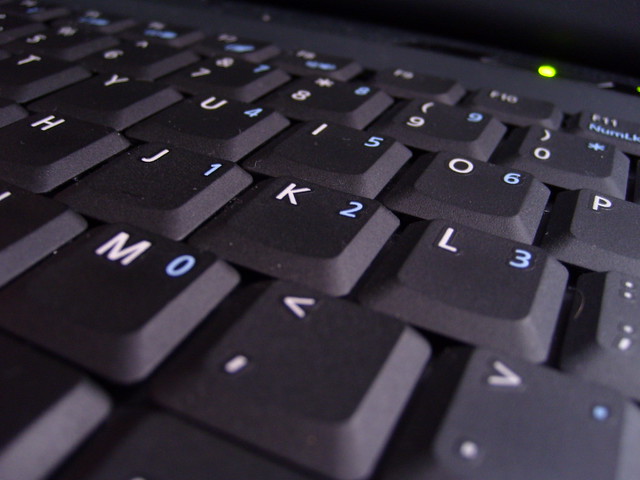
Though this may change in the future, I haven't travelled much outside the US since joining IBM.  My most recent trip was to three Scandinavian countries, and I have to admit it, I didn't think too much about taking extra security precautions while abroad.

Well, if you know anything about this big company, it's that it does business in almost every country on the planet, and it puts a lot of emphasis on building new business in new and growing markets.

Imagine, as I sometimes do, that I was a senior executive ... or a high ranking military or government official. Then my preparations and precautions might have been a little different.  How different you say?

Try this on for size, from a description of the recent actions of a senior analyst at the Brookings Institute bound for China:
  • "He leaves his cellphone and laptop at home and instead brings loaner devices, which he erases before he leaves the United States and wipes clean the minute he returns" 
  • "In China, he disables Bluetooth and Wi-Fi, never lets his phone out of his sight and, in meetings, not only turns off his phone but also removes the battery, for fear his microphone could be turned on remotely" 
  • "He connects to the Internet only through an encrypted, password-protected channel, and copies and pastes his password from a USB thumb drive" 
  • "He never types in a password directly, because, he said, “the Chinese are very good at installing key-logging software on your laptop” 
Mind you, it's probably wrong, or at least misleading, to single out China here, because unless I'm very much mistaken, every country has access to most of the same technologies. China is different, though, as a great deal of the hardware in laptops and phones is made there.

If you read down through the comments following the article (and there are many) you may light upon one that caught my eye: "So why would your physical location make that much of a difference?" I'm not technical enough to understand all the implications of this question, but my guess is the answer is "not as much as one might think/hope."

Anyway, something to think about from a national security point of view. And as someone who promotes international conferences on energy and security as part of my social media avocation, these issues need to become part of the awareness of everyone in our industry whose travels take them across international borders.

You can read the whole NYT's article HERE. I think you'll find it interesting.  And, hat tip to Ernie H for providing this LINK to recent guidance on laptop security when travelling abroad. Warning: it's a very long list.

Image courtesy of DeclanTM at Flickr.com

Thursday, September 22, 2011

2011 (exceedingly short) Energy Security Book List


There are two new books out in the last few months I want you to know about. Whether you have time to read them, even if I am successful in getting you worked up about them, well, that's another story. So again, it's only two books, which is probably one or two more than you'll be able to get to given your current workload. But here's why you should give them a shot.

Neither addresses cyber security too much, but I consider all of this part of the broader "energy security" domain, and as such, this info is part of the foundation one needs to understand the full context of our cyber security, privacy and compliance landscape, where it's been and where it's going.

The first one is by former Austin Energy CIO Andres Carvallo, called The Advanced Smart Grid: Edge Power Driving Sustainability. Co-authored with frequent technology writer John Cooper, this book is relatively short at ~200 well illustrated pages, and is a pleasure to read. I'm going to re-use some of the laudatory words I recently posted in an Amazon review.

Before they invite you to travel with them into the future, Carvallo and Cooper do a solid job of orienting the reader with concise summaries of where the grid came from, how it's evolved over time, and as accurately as possible, how it's doing in its current state. For the many immigrants who've recently moved to energy from other sectors (like me), this is a great grounding.

The authors then look past the current climate of activity, much of it initially fueled with government grants, to a phase where business drivers alone dictate what gets deployed next. Ultimately, they begin to unveil for us a blurry but emerging vision of "the advanced Smart Grid", that's predicated on pervasive IP networking, tons and tons of data, microgrids, EVs, virtual power plants, new business models and more.

I particularly liked this point when the authors did pause for a moment on security:
As a foundational infrastructure, the Smart Grid cannot afford to get out in front of its ability to remain secure.
That's right ... what a concise way of saying so much. For me, it was well worth the time, and depending on your background and/or day job, it might be for you too.

Book number two is from one of the (if not, THE) true giants of global energy thinking over the past decades, Daniel Yergin. Best known (to me, anyway) for his biblical telling of the history and future of the oil industry in The Prize, his new book, The Quest: Energy, Security, and the Remaking of the Modern World, expands in scope to consider all energy sources. Recently reviewed in the NYT, this excerpt seems apropos:
When it comes to assessing the world’s energy future Mr. Yergin is a Churchillian. He argues that we should consider all possible energy sources, the way Winston Churchill considered oil when he spoke to the British Parliament  in 1913. “On no one quality, on no one process, on no one country, on no one route, and on no one field must we be dependent,” Churchill said. “Safety and security in oil lie in variety and variety alone.”
... and one more thing, for which the a smarter grid is the essential precursor:
One of Mr. Yergin’s closing arguments focuses on the importance of thinking seriously about one energy source that “has the potential to have the biggest impact of all.” That source is efficiency. It’s a simple idea, he points out, but one that is oddly “the hardest to wrap one’s mind around.” More efficient buildings, cars, airplanes, computers and other products have the potential to change our world.
Sounds great, right? Well, the bad news for you travelers is that, from a weight perspective, is that it tops 800 pages, though if you get the ebook version it's as light as can be. Now reading it, or the majority of it, that's another story. If it's too much for you to consider, maybe you can wait and hope for a movie version. But I wouldn't count on it.

Happy reading!

Photo credit: Miamism on Flickr.com

Monday, May 2, 2011

Anonymous Now Calling its Shots: Middle East Troublemaker in the Corner Pocket


How many hackers, Babe Ruth-like, are brazen enough to broadcast what they're going to do, and to whom they're going to do it, ahead of time?

Seems like the US and Anonymous are on the same side ... for the moment, anyway. Not sure web site defacements are going to get the Ahmadinejad dictatorship off the Iranian people's back, but it's better than nothing. Here's some CNET coverage on this.

Oh, and happy No More Bin Laden day to you!

It's been a long time coming.

Image credit: Sinistra Ecologia Liberta on Flickr.com